
"Soviet producing areas"
300 article(s) found

Columbia Tarasu Latin American coffee with the name of extra hard beans.
Tarasu in Costa Rica is one of the major coffee producers in the world. The coffee is light and pure in flavor and pleasant in aroma. Tarasu Latin America his coffee is a famous local product, but the production is limited, about 72600 kilograms a year, it is grown on a piece of land called Latin America. In fact, this land can produce more than 450 tons of coffee a year. But the species of Tarasu Latin American coffee
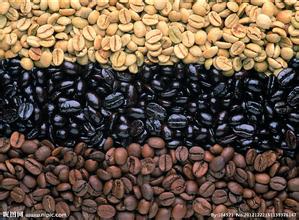
How much coffee does a coffee tree produce in a year
The Yunnan-Vietnam railway bar located at the Yunnan-Vietnam railway station is the product of this time. Although it is called a bar, it actually sells coffee, a practice that originated in France, where cafes are characterized by a mixture of cafes and taverns. This is just the beginning of the future popularity of coffee. In 1938, Peking University, Tsinghua University and Nankai formed the famous National Southwest Association.
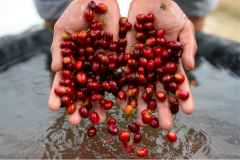
Looking for Yunnan small-grain coffee with the same quality as the world's top coffee.
For the exchange of professional baristas, please follow the article written by the Coffee Workshop (Wechat official account cafe_style). Huang Xuezheng took the readers of "studying China" to Yunnan in 2013, saw the tiger jump, looked at the white head of Yulong, paced the bluestone of Dukazong in Sunlight City, and also showed the romance of Juanshuifang in the ancient city. Along the way, prepare tea in the evening and make coffee in the morning.

Yunnan Tiekka Coffee Flavor Description Grind Scale Variety Production Area Treatment Method Introduction
Typica: Ethiopia's oldest native variety, produced in Ethiopia and the southeast of Sudan, all Arabica are derived from Typica. Elegant flavor, but weak constitution, poor disease resistance, fruit yield less. Jamaica Blue Mountains, Sumatra Mandalay, Hawaii Kona

Flavor description of Yejia Fischer boutique coffee beans introduction to the characteristics of taste varieties and producing areas
In September 1974, as a result of a group of young officers forming the military, police and local army coordination committee (that is, DERGUE, English SHADOW, then generally refers to the military junta and the Mengistu regime) launched a military coup, overthrew the Haile Serassie government, announced the end of monarchy and the establishment of an interim junta. November

Introduction of boutique coffee beans in the western valley of Tarasu, Costa Rica
Tarasu, Costa Rica, arrazu) is one of the major coffee producing areas in the world, with a light and pure flavor and pleasant aroma. Costa Rica, with its fertile volcanic soil and good drainage, is the first country in Central America to grow coffee and bananas for commercial value. Coffee and bananas are the country's main exports. Extra hard beans are excellent.

Introduction of Cedar Mochizo Coffee with Jasmine Flavor Flavor and Taste in Manor producing area
During the reign of Emperor Selassie, Haile Selassie was made regent in 1916 and became king in 1928. On November 2, 1930, he was crowned Emperor Haile Selassie I. In 1936, Italy invaded again, occupied Addis Ababa, conquered Ethiopia, and Selassie went into exile in London. The allies defeated Italy in 1941 and Selassie I returned to the country on May 5 of the same year.

When was the taste characteristics of Yunnan geisha coffee beans introduced into China?
The taste of Yunnan geisha coffee beans is characterized by when the goddess manor planted in China was introduced to grow coffee organically, using native trees and fruit trees as shade. The fertilizer used is also coffee, cherry and fruit mixed with molasses and added to the fertile soil with high mineral content in the adjacent mountain area combined with microbial fermentation to produce organic fertilizer that can enhance coffee value and disease resistance, which is also used.

Flavor characteristics of Ethiopian coffee producing areas what are the famous coffee producing areas of Ethiopian coffee
Professional coffee knowledge exchange more coffee bean information please follow the coffee workshop (Wechat official account cafe_style) in the boutique coffee field, Ethiopia is undoubtedly one of the very important producing areas. You can easily find the word Ethiopian on almost all roasters' lists, and you almost never miss the podium in various coffee competitions, such as good food.
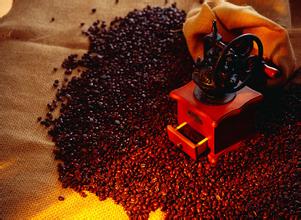
Introduction to the Grinding Calibration method for describing the Flavor of Yunnan small-grain Coffee
Yunnan small-grain coffee, that is, Arabica coffee, now belongs to an awkward position in the international market as well as in China. For example, coffee shops rank low in individual coffee, and the cheapest coffee is Yunnan coffee. This is an issue that cannot be avoided. Since you ask the landlord what is the difference between the main producing areas and the main producing areas, let's tell the story of the variety. Yunnan can be said to be present.

Introduction to the Grinding scale of Tarazhu Coffee beans in Costa Rica
Introduction to the Grinding scale varieties of Tarazu Coffee beans in Costa Rica the National Liberation Party won four times in the six general elections from 1953 to 1978. During its reign, the party emphasized state intervention in the economy, nationalization of some industries, increased import taxes to protect national industries, forced United fruit companies to increase income tax, strengthened relations with other Latin American countries and Western Europe, and changed the order.

The quietly growing coffee industry in Southeast Asia Yunnan small-grain coffee is the favorite of big international brands.
Professional coffee knowledge exchange more coffee bean information Please pay attention to the coffee workshop (Wechat official account cafe_style) We have always thought that the world coffee producing area should be mainly in Central and South America. Asians are slow to ripen coffee, and the main consumption is tea culture. Once upon a time Vietnam was the second largest producer in the world, while Yunnan, China, was also eager to catch up, and its quality
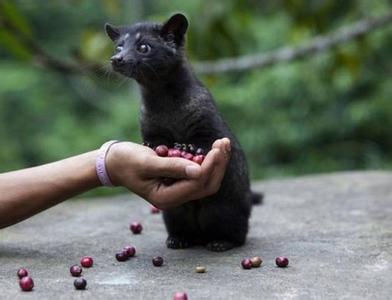
Introduction to the Grinding scale of the Variety producing area by the method of describing the Flavor of Yejia Fischer Coffee
Yega Fischer Coffee Flavor description method Variety region Grinding scale introduction in February 1977, Lieutenant Colonel Mengistu Hale Maryam (MENGISTU HAILE MARIAM) launched a military coup and served as chairman and head of state of the interim military Administrative Council. In 1979, the Ethiopian Labor people's Party Organization Committee, dominated by soldiers, was established to implement an one-party system. 1984

Introduction to the grinding scale of Yega Ficher flavor coffee bean description variety production area treatment method
Yega Ficher Coffee Bean description Variety production area treatment Grinding scale Yega Snow Coffee itself is a small town of about 20, 000 people, with three neighboring small producing areas Wenago, Kochere and Gelena Abaya, because the flavor of the coffee produced is almost the same as that of Yejasuffe, so it is also classified into the Yega Chefe area. Yega snow caffeine, whether it's Wen.

Introduction to the description of the flavor of Costa Rican coffee producing areas
In 1949 Figueres Ferrer handed over power to the elected leader of the National Union Party, O. Ullat Blanco. In October 1951, led by Figueres Ferrer, the National Liberation Party was founded. In the six general elections from 1953 to 1978, the National Liberation Party won four times. When the party was in power, it stressed that the state intervened in the economy, nationalized some industries and raised import taxes to protect the nation.

An introduction to the Tarasu region of Costa Rica, one of the major coffee producing countries in the world
Tarrazu in Costa Rica is one of the major coffee producing areas in the world. The coffee produced is light and pure in flavor and pleasant in aroma. Costa Rica, with its fertile volcanic soil and good drainage, is the first country in Central America to grow coffee and bananas for commercial value. Coffee and bananas are the country's main exports. In 1729, coffee was introduced from Cuba to Goth.

The processing method of Yunnan Tieka Coffee beans description of Flavor of varieties produced by Grinding scale
Yunnan Tieka coffee bean processing method grinding scale variety flavor description of the variety, also known as the old variety of small-grain coffee, its yield is less, cultivation is difficult, so the price is much higher than ordinary small-grain coffee. Tibica coffee, native to Ethiopia and southeastern Sudan, is the most widely cultivated variety of coffee in the Western Hemisphere. The plants are strong, but not light-resistant, in Hawaii.

Do you know there is coffee in Laos? Laos Coffee introduction |
The main coffee growing area in Laos is the high-altitude Boravan Plateau, where there is volcanic red soil, where coffee plants thrive. Coffee plant varieties include Arabica coffee, Robusta coffee and Liberika coffee. The French first introduced coffee plants to the region in the 1920s, and the French designated its fertile soil plateau as the main coffee growing area.

Introduction to the flavor of Costa Rican coffee introduction to Tarasu producing area in Costa Rica
Costa Rican coffee, Costa Rican coffee, full particles, ideal acidity, unique and strong flavor. Tarrazu in Costa Rica is one of the major coffee producing areas in the world. The coffee produced is light and pure in flavor and pleasant in aroma. Costa Rica, with its fertile volcanic soil and good drainage, was the first in Central America to grow coffee and bananas for commercial value.

Introduction to the production area of grinding scale of Yunnan Tieka coffee bean flavor description treatment method
In addition, although the environmental problems of coffee cultivation can meet the standards of hot areas, they are far away from the equator, evaporation, large-scale coffee cultivation in Yunnan is less than 1100m above sea level, the severe drought in Yunnan in recent years, and the frost period in the producing areas, and so on, all make the cultivation of coffee can not be guaranteed normally, directly affecting the quality of coffee production. As for other processing problems and the quality of farmers, let alone say so.